

By Nellie Salmon
When was the last time you bought a magazine?
For most people, the answer is probably not recently. In an age dominated by smartphones and social media, magazines are no longer the weekly or monthly purchase they once were. With news, fashion and celebrity updates now available online, print media is losing its place in everyday life.
Social media platforms such as TikTok and Instagram have transformed the way people discover trends. In the past, magazines were often relied on to feature the latest fashion styles and seasonal trends. Today, trends are created and spread online within hours.
Fashion has become increasingly fast-paced because of social media. Micro-trends are constantly emerging, creating a cycle that moves far quicker than traditional magazines can keep up with. While magazines are often published weekly or monthly, social media is updated every second.
Ruby Smith, aged 22, from Llandudno posts fashion related content on social media platform TikTok and said: “Social media has become a place for anyone to post their own style and share fashion inspiration with others. I think platforms like TikTok have made fashion more accessible, as anyone can influence trends rather than just celebrities or magazine editors”
Interview with student journalist at the University of Chester, Preeya Abidi-Fallows, 20
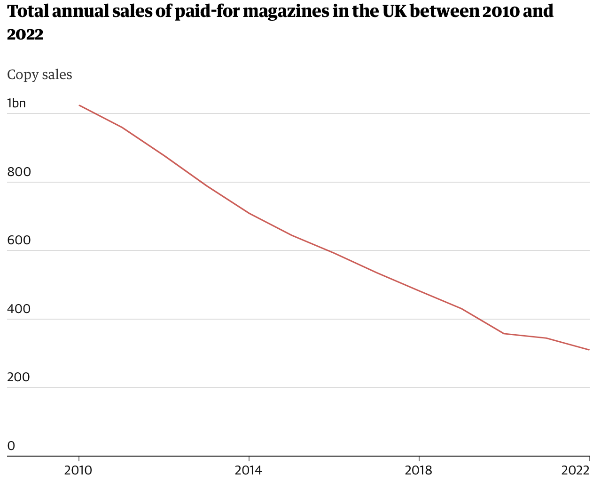
To show the decline in magazine sales The Guardian released this graph in 2022,
Many publications now offer digital subscriptions alongside their print editions to remain relevant. Others are finding new ways to attract readers through celebrity covers, exclusive interviews and collaborations.
Recently, fashion magazine Elle generated significant attention online after partnering with beauty brand Charlotte Tilbury to include one of the company’s products inside selected editions of the magazine. It quickly gained popularity on TikTok, with users sharing videos of themselves searching for copies.
Llola Mayne, aged 20, from Chester said: “I don’t usually buy magazines, but when I saw this trending on TikTok, I went to five different shops to try and find it because it was too much of a good deal to miss. I also didn’t realise how much I’d enjoy reading a magazine too”.
Examples such as this suggest that social media is not always replacing magazines. In some cases, it is helping to promote them.
Video further explaining how magazines are being replaced by social media content.
At the same time, there has been a growing interest in digital detoxing which could create new opportunities for print media. Increasing numbers of Generation Z are becoming aware of the impact excessive screen time can have on their mood and wellbeing. As a result, some are looking for ways to reduce their time online.
For those wanting to keep up with trends without endlessly scrolling through social media feeds, magazines may offer an appealing alternative.
While social media has undoubtedly taken over many of the role’s magazines once fulfilled, print publications are now adapting rather than disappearing.
As more people seek a break from endless scrolling, could picking up a magazine become the next trend?


